Choosing the right water treatment system for your home can be overwhelming. With so many options available, understanding the differences between a water softener and a whole house filtration system is crucial in making the right decision for your household needs. Both systems play essential roles in improving water quality, but they solve different problems. Whether you’re dealing with hard water or specific contaminants, selecting the best solution requires knowing how each system works, what issues they address, and how they benefit your home.
What is a Water Softener?
A water softener is designed to remove minerals like calcium and magnesium from your water that cause hardness. Hard water can be a nuisance, leading to limescale buildup in your plumbing and appliances, soap scum on your dishes and shower, and dry skin or hair. Water softeners solve this problem by using an ion exchange process. During this process, calcium and magnesium ions in hard water are replaced with sodium or potassium ions, resulting in softer water.
Benefits of a Water Softener:
- Protects appliances: Soft water prevents scale buildup in your water heater, dishwasher, washing machine, and other appliances, extending their lifespan.
- Softer skin and hair: Soft water is gentler on your skin and hair, reducing dryness and irritation.
- Cleaner laundry and dishes: Clothes washed in soft water are softer and brighter, and dishes come out free of spots or residue.
- Reduced soap usage: Soft water requires less soap and detergent to lather, saving you money on cleaning products.
What is a Whole House Filtration System?
A whole house filtration system is designed to remove contaminants from your water supply to improve overall water quality throughout your home. These systems target specific water quality issues, such as sediment, chlorine, iron, sulfur, and volatile organic compounds (VOCs). While water softeners focus on removing hardness, whole house filtration systems address broader contamination problems that may affect your health, the taste of your water, and the condition of your plumbing.
A whole house filtration system is installed at the point where water enters your home, ensuring that all water coming into the house, whether for drinking, bathing, or cleaning, is filtered and free of unwanted impurities.
Benefits of a Whole House Filtration System:
- Cleaner, healthier water: Removes harmful contaminants such as chlorine, pesticides, lead, and other chemicals that can affect your health and the taste of your water.
- Improved taste and smell: Filters out unpleasant odors and tastes, leaving you with fresher, cleaner water for drinking and cooking.
- Protects your plumbing: Reduces the amount of sediment and rust that can clog your pipes, preserving the lifespan of your plumbing system.
- Versatility: Can be customized with different types of filters to target the specific contaminants found in your water supply.
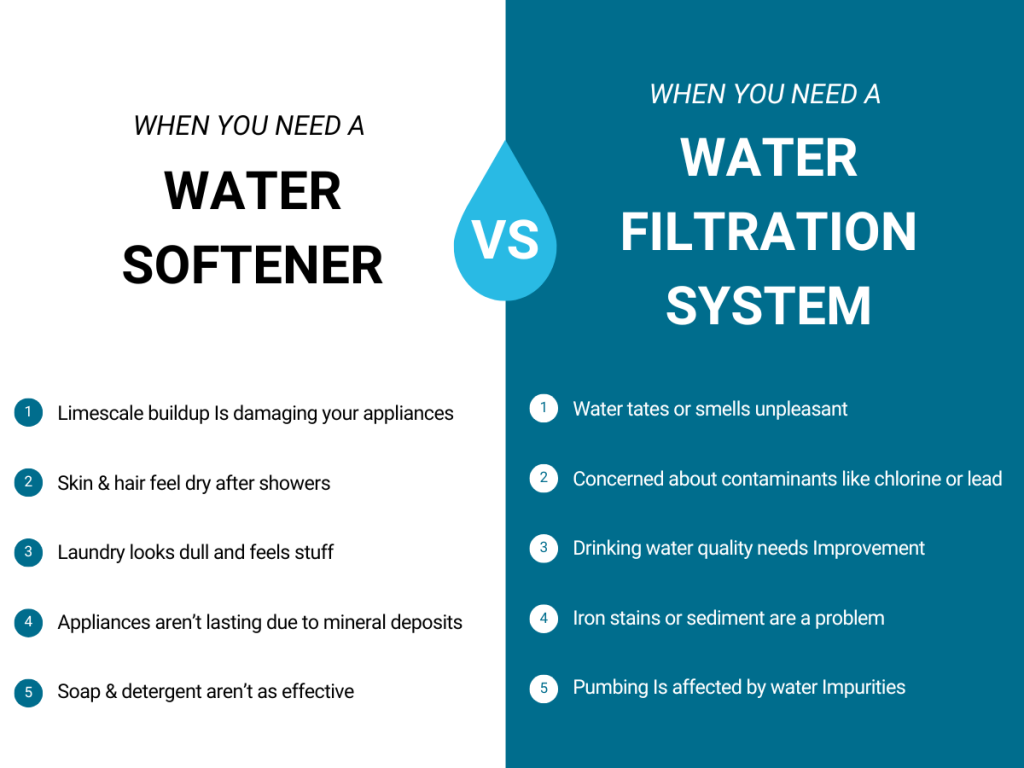
Water Softener vs. Whole House Filtration System
While both water softeners and whole house filtration systems are valuable for improving water quality, they serve different purposes and address unique water issues. Understanding the key differences between the two will help you determine which system is best for your home:
- Purpose:
- Water Softener: Removes hardness minerals like calcium and magnesium that cause limescale and soap scum.
- Whole House Filtration: Removes a wide range of contaminants such as chlorine, sediment, iron, and volatile organic compounds (VOCs).
- Installation:
- Water Softener: Typically installed where the water supply enters the home and treats only hardness.
- Whole House Filtration: Installed at the main water entry point and filters all water coming into the home, addressing multiple water quality concerns.
- Water Taste and Health:
- Water Softener: Improves the feel and quality of water for cleaning and bathing but doesn’t remove chemicals or contaminants that affect health or taste.
- Whole House Filtration: Improves the taste and smell of your water by filtering out chemicals, improving water quality for drinking, cooking, and bathing.
- Maintenance:
- Water Softener: Requires regular refilling with salt and occasional cleaning or maintenance of the softening resin.
- Whole House Filtration: May need filter changes based on the type of filter used (carbon, sediment, etc.), but it’s generally low maintenance.
- Cost:
- Water Softener: Typically less expensive to install, with ongoing costs for salt and maintenance.
- Whole House Filtration: Can be more expensive initially, but offers broader protection for your entire water supply.
Do You Need a Water Softener or a Whole House Filtration System?
The decision between a water softener and a whole house filtration system depends on the specific water issues you’re facing:
- Hard Water: If your primary concern is hard water, which causes limescale buildup, dry skin, and spots on dishes, then a water softener is likely the best solution for your home. It will eliminate the hardness and protect your appliances, making cleaning more effective.
- Contaminants and Water Quality: If your main concern is contaminants like chlorine, lead, or sediment affecting the quality and safety of your water, a whole house filtration system is the better choice. It provides cleaner, healthier water throughout your home and addresses a wider range of potential water quality problems.
- Both Hardness and Contaminants: In some cases, you may need both systems to get the best water quality. A combination of a water softener and a whole house filtration system ensures that you remove hardness while also filtering out harmful contaminants. This is especially important for homes with well water or in areas with high levels of chlorine or other pollutants.
Do you need a water softener with a whole house filtration system?
Yes, you may need both a water softener and a whole house filtration system depending on the specific water issues in your home. While a whole house filtration system effectively removes contaminants like chlorine, sediment, iron, and other harmful substances, it doesn’t address hard water problems. Hard water, caused by high levels of calcium and magnesium, can lead to limescale buildup in your plumbing and appliances, reducing their efficiency and lifespan. A water softener complements the filtration system by removing these hardness minerals, ensuring your water is both clean and soft. Using both systems together ensures comprehensive water treatment, providing you with safe, clean, and soft water throughout your home.
What is better, water filtration or water softener?
Choosing between a water softener and a whole house filtration system ultimately depends on your water’s specific characteristics and your family’s needs. If you’re unsure, it’s always a good idea to start with a professional water test. Testing your water will reveal the specific issues you’re dealing with, whether it’s hard water, chemical contaminants, or both.
Find the Right System for your Home
At JRC Home Solutions, we specialize in providing customized water treatment solutions for every home. Whether you need a water softener, a whole house filtration system, or both, we can help you choose the best system to improve your water quality and protect your home. Contact us today to schedule a consultation and take the first step toward cleaner, healthier water!